
The MUTHOS has achieved significant milestones in identifying emerging technologies. One notable accomplishment includes the identification of a robust Data Source containing a substantial volume of scientific and multi-disciplinary documents related to emerging technologies. Additionally, we have successfully employed specialized tools, particularly BERTopic, to extract and analyze emerging topics and trends from these documents. Furthermore, developing a comprehensive evaluation strategy featuring automation for the precise assessment of emerging technology documents marks a significant advancement in our approach. These achievements underscore the effectiveness and innovation of our methodology in identifying and understanding emerging technologies within the MUTHOS project. The insights gained from this research pave the way for advancements in technology assessment, providing valuable contributions to identifying and analysing emerging trends, breakthroughs, and innovations in various domains.
MUTHOS 1: Multi-Source Triaged Horizon Scanning Phase 1
Semantic Enhanced Topic Network .
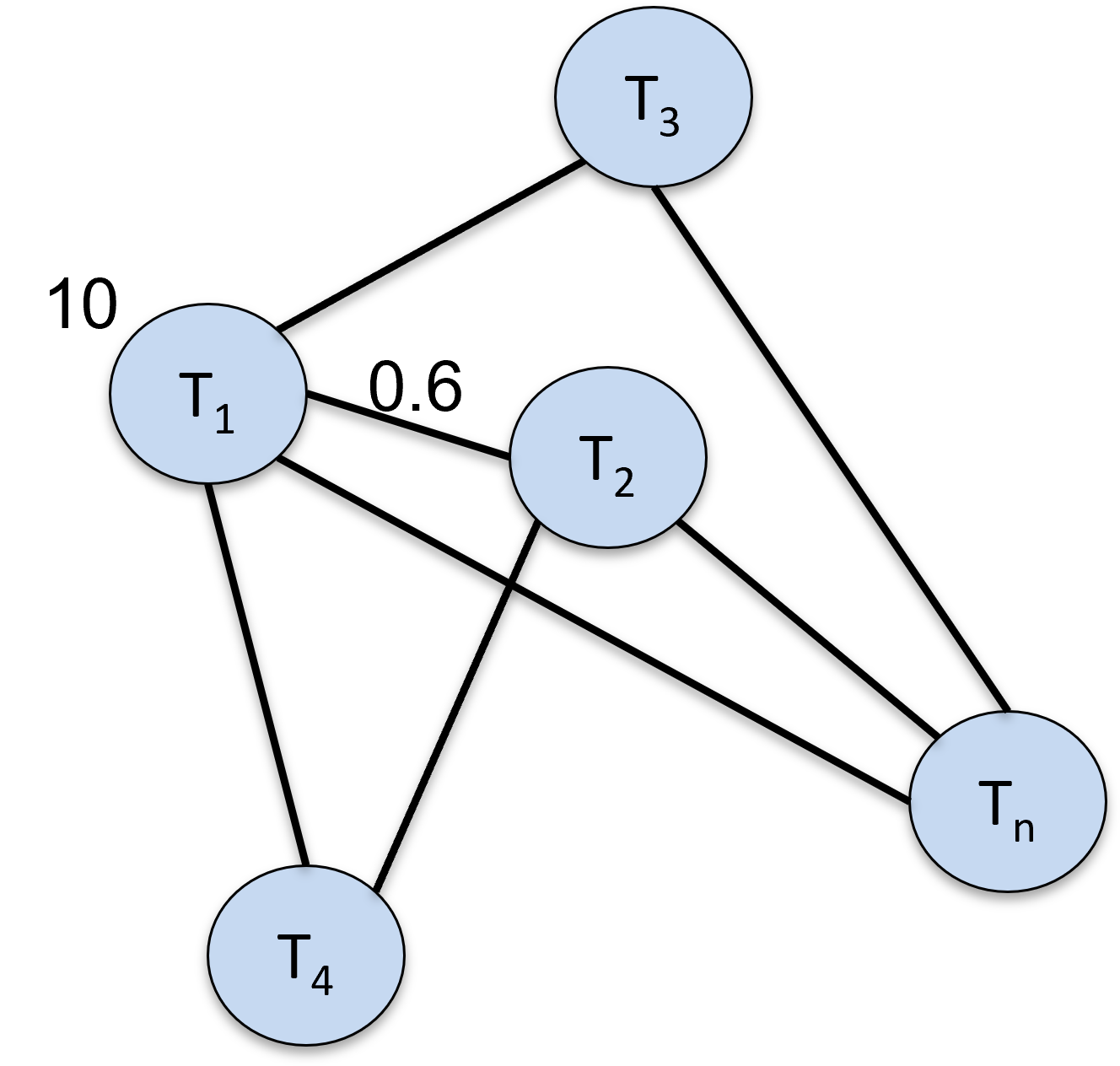
The Semantic Enhanced Topic Network is a powerful tool that combines semantic analysis with network representation to provide a more comprehensive understanding of the relationships between topics within a corpus of text data. Unlike other topic modeling techniques, such as LDA and NMF, which only identify topics based on word co-occurrence within documents, the Semantic Enhanced Topic Network uses advanced semantic analysis techniques, often utilizing pre-trained language models like BERT. These language models can accurately understand the context and meaning of words within the document, resulting in a more nuanced representation of topics.
Evolutionary Topic Network

The Evolutionary Topic Network identifies and tracks emerging technologies within a dynamic text corpus, combining topic modelling with temporal analysis to examine how topics develop and how technology discussions shift over time. This supports technology assessment and foresight by revealing the emergence and development of new topics ahead of their wider adoption.
Community of Unfamiliar Topics
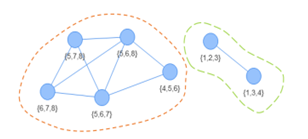
The Modified Clique Percolation Method (M-CPM) is an advanced network analysis tool for community detection in complex evolutionary networks. Its primary goal is to identify overlapping communities or clusters within a network. By leveraging the M-CPM algorithm, researchers can analyze and study how communities evolve and change over time in dynamic networks. The method allows nodes to belong to multiple communities simultaneously, accommodating the inherent overlapping nature of many real-world networks. With the ability to identify overlapping communities, the M-CPM provides a more comprehensive understanding of the intricate relationships between nodes, unveiling hidden patterns and connections that might not be apparent through traditional community detection methods.
How these Tools Impact Organisations
The early identification of emerging topics, topics growth and collaboration may significantly impact cybersecurity. A few of them include:
- Stay ahead of threats by identifying trending topics in cybersecurity.
- Plan by anticipating emerging attack methods and risks.
- Implement collaboration and knowledge sharing among cybersecurity professionals.
- Allocate resources wisely based on the identified risk levels.
- Raise awareness and provide targeted training to enhance cyber defence.